


Redraw!
Citizen science in the service of the ocean
With RETRACE!, Surfrider uses citizen science to empower every citizen to be an agent of change.
Our program analyzes the quantity, type, and distribution of litter found on beaches and riverbanks across Europe, thanks to a rigorous scientific protocol carried out by thousands of participants.
As true guardians of their communities, citizens are often the first to notice pollution affecting their local areas.
Through the RETRACE! project, they play a vital role in gathering local information, systematically documenting waterborne waste pollution in accordance with European scientific standards.
From field data to policy actions
This information gathered in the field informs our actions at all levels—local, national, and European.
The data is analyzed, cross-referenced, and standardized according to established scientific protocols, then made available to researchers to advance our understanding of water pollution.
It also serves as a key basis for our advocacy efforts with policymakers and industry leaders to address pollution directly at its source and promote stricter regulations.
Everyone’s commitment comes together to form a collective force: every cleanup strengthens our shared effort and enables Surfrider, along with the organizations it works closely with, to speak with a united and effective voice against water pollution.
Each participant, in their own way, makes a tangible contribution to protecting the environment and the ocean while helping to shape environmental laws.
Our campaigns
Tobacco
Cigarette butts are the most commonly collected waste during Surfrider’s field operations, and consistently top the lists of items counted during community cleanups.
Every year, 4.5 trillion cigarette butts are discarded into the environment.
Made of a plastic filter (cellulose acetate), they release more than 7,000 toxic chemicals, and a single cigarette butt can pollute up to 1,000 liters of water.
Data from the RETRACE! program’s collection efforts help document the extent of this pollution in urban, coastal, and aquatic environments, and demonstrate its direct impact on marine ecosystems.
Carried by the wind and rainwater into rivers and then the ocean, cigarette butts break down into microplastics while releasing toxic substances that contaminate wildlife.
This field data supports Surfrider’s advocacy campaigns aimed at holding the tobacco industry accountable.
As a result, cigarette filters have been included in the European Single-Use Plastics (SUP) Directive, which applies the “polluter pays” principle to manufacturers to fund the prevention and management of this pollution.
Given the scale of the problem, Surfrider is taking a stronger stance and is now calling for a ban on cigarette filters—a position supported by health organizations and the World Health Organization—while also warning about new sources of pollution such as puffs (disposable e-cigarettes) and nicotine pouches.
Thus, the data collected during citizen-led initiatives goes beyond simply measuring pollution: it helps document a systemic problem, demonstrates—through the number of citizens involved—the strong demand for ambitious action from public policymakers, and supports concrete policy measures to reduce this pollution at its source.

Plastic:
—a global scourge of the 21st century
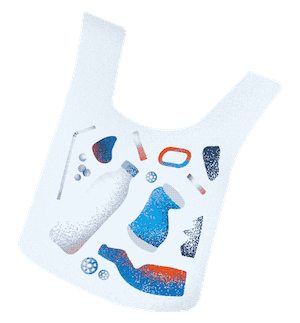
Single-use plastics (such as bottles, plastic bags, food packaging, cotton swabs, and cigarette filters) are among the most commonly found items during beach cleanups.
Designed to be used for only a few minutes, they nevertheless persist in the environment for years and account for a significant portion of the pollution found on beaches and in waterways.
The data collected and quantified during the RETRACE! program’s cleanup operations make it possible to document this pollution accurately and on a regular basis. These observations confirm the scale of a global phenomenon: plastic production has risen from 1.5 million tons in 1950 to over 450 million tons in 2020 (1), and could reach nearly 740 million tons by 2040 (2).
A significant portion of this waste escapes waste management systems and ends up in natural environments, where it gradually breaks down into microplastics.
Field data has played a key role in Surfrider’s advocacy efforts to reduce single-use plastics at the source. In particular, it has contributed to the adoption of the European Single-Use Plastics (SUP) Directive, which aims to ban or reduce certain products that are among the most commonly found in the environment.
Surfrider continues this work today by monitoring the implementation of this directive in member states, particularly at the national level, to ensure its effective enforcement.
Furthermore, now that the Packaging and Packaging Waste Regulation (PPWR) has been adopted, the association continues to advocate at the European level to support its implementation, particularly in the food service sector, with the aim of promoting solutions focused on reduction and reuse rather than misleading alternatives.
The data collected also continues to be used at the European level as part of the evaluation process for the SUP Directive.
As such, data from citizen-led collection efforts helps document the extent of plastic pollution, support ambitious regulations, and guide public policy toward a genuine reduction of plastics at the source.
Biomedia
Biomedia are small plastic carriers used in many wastewater treatment plants to promote the growth of bacteria that filter wastewater.
But when not properly contained, these cylinders—just a few millimeters in size— can escape during heavy rains, overflows, or maintenance operations. Once released, they join the 9 to 15 million tons of plastic that pollute the oceans each year.
Thanks to observations made during citizen-led cleanups and field reports submitted through the RETRACE! program, Surfrider has been able to document the emergence of this type of pollution, which remains largely unknown.
To date, more than 40 incidents of biomedical waste pollution have been recorded in 12 European countries, with over 1,600 reports from citizens noting its presence on beaches and in aquatic environments.
These data have brought to light pollution that had previously been largely absent from official statistics and have informed Surfrider’s investigative and advocacy work.
This citizen-led campaign contributed to a major breakthrough: the inclusion of measures to prevent the loss of biomedical waste in the European Urban Waste Water Treatment Directive.
Today, data collection and reporting continue to advance scientific understanding and support Surfrider’s efforts to better document this pollution and ensure the effective implementation of measures designed to prevent these leaks at the source.

Industrial plastic pellets
Industrial plastic pellets (IPP), also knownas pellets, areone of the main sources of primary microplastic pollution.
Each year, approximately 180,000 tons of plastic pellets are lost in Europe, and hundreds of thousands of tons end up in aquatic environments worldwide.
Thanks to the data collection and quantification efforts carried out as part of the RETRACE! program, the presence of these microplastics is regularly documented on beaches and along waterways.
These field observations helpidentify the extent and scale of these spills andinform Surfrider’sscientific research and expert analysis on this form of pollution, which is still widely underestimated.
This data directly contributes to the advocacy efforts carried out by the association.
In 2021, Surfrider published the report Plastic Giants, which played a key role in putting plastic pellet pollution on the European political agenda.
This research raised awareness among policymakers about the risks these microplastics pose to the environment, and particularly to the ocean.
These efforts have contributed to concrete regulatory progress. In October 2023, the European Commission proposed the first measures aimed at preventing pollution from plastic pellet losses.
In November 2025, following a series of negotiations among the institutions—which Surfrider closely monitored—a regulation was officially adopted.
It requires member states to ensure that companies handling these pellets comply with certain obligations regarding prevention and cleanup in the event of spills.
As a result, the data collected in the field by you, the public, does not remain isolated: it helps document industrial pollution, strengthen the scientific evidence, and support the adoption of regulations aimed at reducing such pollution at the source and enforcing the “polluter pays” principle.
Tobacco
Tobacco
Cigarette butts are the most commonly collected waste during Surfrider’s field operations, and consistently top the lists of items counted during community cleanups.
Every year, 4.5 trillion cigarette butts are discarded into the environment.
Made of a plastic filter (cellulose acetate), they release more than 7,000 toxic chemicals, and a single cigarette butt can pollute up to 1,000 liters of water.
Data from the RETRACE! program’s collection efforts help document the extent of this pollution in urban, coastal, and aquatic environments, and demonstrate its direct impact on marine ecosystems.
Carried by the wind and rainwater into rivers and then the ocean, cigarette butts break down into microplastics while releasing toxic substances that contaminate wildlife.
This field data supports Surfrider’s advocacy campaigns aimed at holding the tobacco industry accountable.
As a result, cigarette filters have been included in the European Single-Use Plastics (SUP) Directive, which applies the “polluter pays” principle to manufacturers to fund the prevention and management of this pollution.
Given the scale of the problem, Surfrider is taking a stronger stance and is now calling for a ban on cigarette filters—a position supported by health organizations and the World Health Organization—while also warning about new sources of pollution such as puffs (disposable e-cigarettes) and nicotine pouches.
Thus, the data collected during citizen-led initiatives goes beyond simply measuring pollution: it helps document a systemic problem, demonstrates—through the number of citizens involved—the strong demand for ambitious action from public policymakers, and supports concrete policy measures to reduce this pollution at its source.
Single-use plastic
Plastic:
—a global scourge of the 21st century
Single-use plastics (such as bottles, plastic bags, food packaging, cotton swabs, and cigarette filters) are among the most commonly found items during beach cleanups.
Designed to be used for only a few minutes, they nevertheless persist in the environment for years and account for a significant portion of the pollution found on beaches and in waterways.
The data collected and quantified during the RETRACE! program’s cleanup operations make it possible to document this pollution accurately and on a regular basis. These observations confirm the scale of a global phenomenon: plastic production has risen from 1.5 million tons in 1950 to over 450 million tons in 2020 (1), and could reach nearly 740 million tons by 2040 (2).
A significant portion of this waste escapes waste management systems and ends up in natural environments, where it gradually breaks down into microplastics.
Field data has played a key role in Surfrider’s advocacy efforts to reduce single-use plastics at the source. In particular, it has contributed to the adoption of the European Single-Use Plastics (SUP) Directive, which aims to ban or reduce certain products that are among the most commonly found in the environment.
Surfrider continues this work today by monitoring the implementation of this directive in member states, particularly at the national level, to ensure its effective enforcement.
Furthermore, now that the Packaging and Packaging Waste Regulation (PPWR) has been adopted, the association continues to advocate at the European level to support its implementation, particularly in the food service sector, with the aim of promoting solutions focused on reduction and reuse rather than misleading alternatives.
The data collected also continues to be used at the European level as part of the evaluation process for the SUP Directive.
As such, data from citizen-led collection efforts helps document the extent of plastic pollution, support ambitious regulations, and guide public policy toward a genuine reduction of plastics at the source.
Biomedias
Biomedia
Biomedia are small plastic carriers used in many wastewater treatment plants to promote the growth of bacteria that filter wastewater.
But when not properly contained, these cylinders—just a few millimeters in size— can escape during heavy rains, overflows, or maintenance operations. Once released, they join the 9 to 15 million tons of plastic that pollute the oceans each year.
Thanks to observations made during citizen-led cleanups and field reports submitted through the RETRACE! program, Surfrider has been able to document the emergence of this type of pollution, which remains largely unknown.
To date, more than 40 incidents of biomedical waste pollution have been recorded in 12 European countries, with over 1,600 reports from citizens noting its presence on beaches and in aquatic environments.
These data have brought to light pollution that had previously been largely absent from official statistics and have informed Surfrider’s investigative and advocacy work.
This citizen-led campaign contributed to a major breakthrough: the inclusion of measures to prevent the loss of biomedical waste in the European Urban Waste Water Treatment Directive.
Today, data collection and reporting continue to advance scientific understanding and support Surfrider’s efforts to better document this pollution and ensure the effective implementation of measures designed to prevent these leaks at the source.
Industrial plastic pellets
Industrial plastic pellets
Industrial plastic pellets (IPP), also knownas pellets, areone of the main sources of primary microplastic pollution.
Each year, approximately 180,000 tons of plastic pellets are lost in Europe, and hundreds of thousands of tons end up in aquatic environments worldwide.
Thanks to the data collection and quantification efforts carried out as part of the RETRACE! program, the presence of these microplastics is regularly documented on beaches and along waterways.
These field observations helpidentify the extent and scale of these spills andinform Surfrider’sscientific research and expert analysis on this form of pollution, which is still widely underestimated.
This data directly contributes to the advocacy efforts carried out by the association.
In 2021, Surfrider published the report Plastic Giants, which played a key role in putting plastic pellet pollution on the European political agenda.
This research raised awareness among policymakers about the risks these microplastics pose to the environment, and particularly to the ocean.
These efforts have contributed to concrete regulatory progress. In October 2023, the European Commission proposed the first measures aimed at preventing pollution from plastic pellet losses.
In November 2025, following a series of negotiations among the institutions—which Surfrider closely monitored—a regulation was officially adopted.
It requires member states to ensure that companies handling these pellets comply with certain obligations regarding prevention and cleanup in the event of spills.
As a result, the data collected in the field by you, the public, does not remain isolated: it helps document industrial pollution, strengthen the scientific evidence, and support the adoption of regulations aimed at reducing such pollution at the source and enforcing the “polluter pays” principle.